
Mon–Fri: 7:30AM–7PM
Sat: 8AM – 5PM
Sun: Closed

Spay And Neuter

Spay & Neuter Recommendations

Cats

We follow the “Fix by Five” recommendation supported by the Feline Veterinary Medical Association and United Spay Alliance. Both male and female cats should be spayed or neutered before 5 months of age to support long-term health and prevent unwanted litters.

Dogs

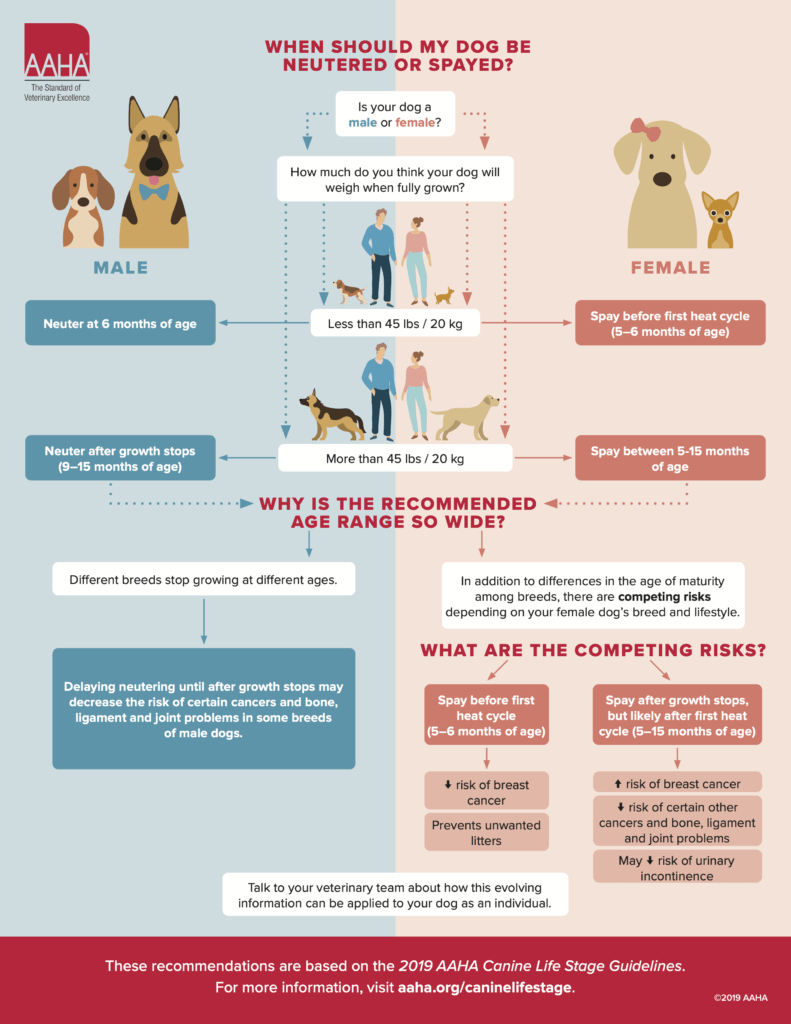
For dogs, we follow current AAHA spay and neuter guidelines, which recommend timing based on your dog’s expected adult size and breed. Because growth rates vary, the ideal age is individualized for each patient.

We’ll discuss the best timing for your pet during their wellness visits and help you plan ahead with reminders when it’s time to schedule.

Mon–Fri: 7:30AM–7PM
Sat: 8AM – 5PM
Sun: Closed

What to Expect on Spay & Neuter Surgery Day

On the day of your pet’s spay or neuter procedure, our team will guide you through each step and answer any remaining questions. Your pet is admitted into a calm, controlled environment designed to reduce stress and support a smooth surgical experience.

After surgery, your pet is closely monitored during recovery until they are awake, stable, and comfortable. Pain management is addressed proactively to support a safe and gentle recovery.

👉We’ve created a short video to walk you through what to expect on your pet’s surgery day. You can also review the steps below for added clarity.

Spay & Neuter Surgery Day: What to Expect

Helping You Feel Confident and Prepared

Morning Check-In

Complete your paperwork online or at check-in. Pick up a pheromone-infused bandana to help your pet stay calm.

Technician Intake

A veterinary technician reviews your pet’s history, explains the plan for the day, and answers your questions.

Cozy Kennel

Your pet relaxes in a clean, comfortable kennel designed to reduce stress.

Vital Signs

We check your pet’s heart rate, temperature, and weight before surgery.

Physical Exam

The veterinarian performs a full head-to-tail exam to confirm your pet is ready for anesthesia.

Bloodwork

Pre-surgical bloodwork checks organ function and overall health for anesthesia safety.

Pre-Anesthesia Medications

Medications are given to reduce anxiety, manage pain, and ensure a smooth transition into anesthesia.

IV Catheter

An IV catheter allows safe delivery of fluids and medications during surgery.

Endotracheal Tube

An ET tube protects the airway and delivers oxygen while your pet is under anesthesia.

Monitoring

Your pet is continuously monitored for heart rate, breathing, blood pressure, oxygen levels, and temperature.

Preparing for Surgery

The surgical area is shaved and disinfected to maintain a sterile environment.

Surgical Procedure

The veterinarian performs the surgery while a technician closely monitors vital signs.

Recovery

After surgery, your pet is kept warm, comfortable, and closely monitored as they wake up.

Doctor Update

A veterinarian will call you with an update and discuss pickup timing.

Discharge Appointment

A technician reviews home care instructions and medications before you head home together.